
Despair
Here is the full storyboard we created to visualize the character's emotions and show what was going on in the story so that we could fully understand the context.
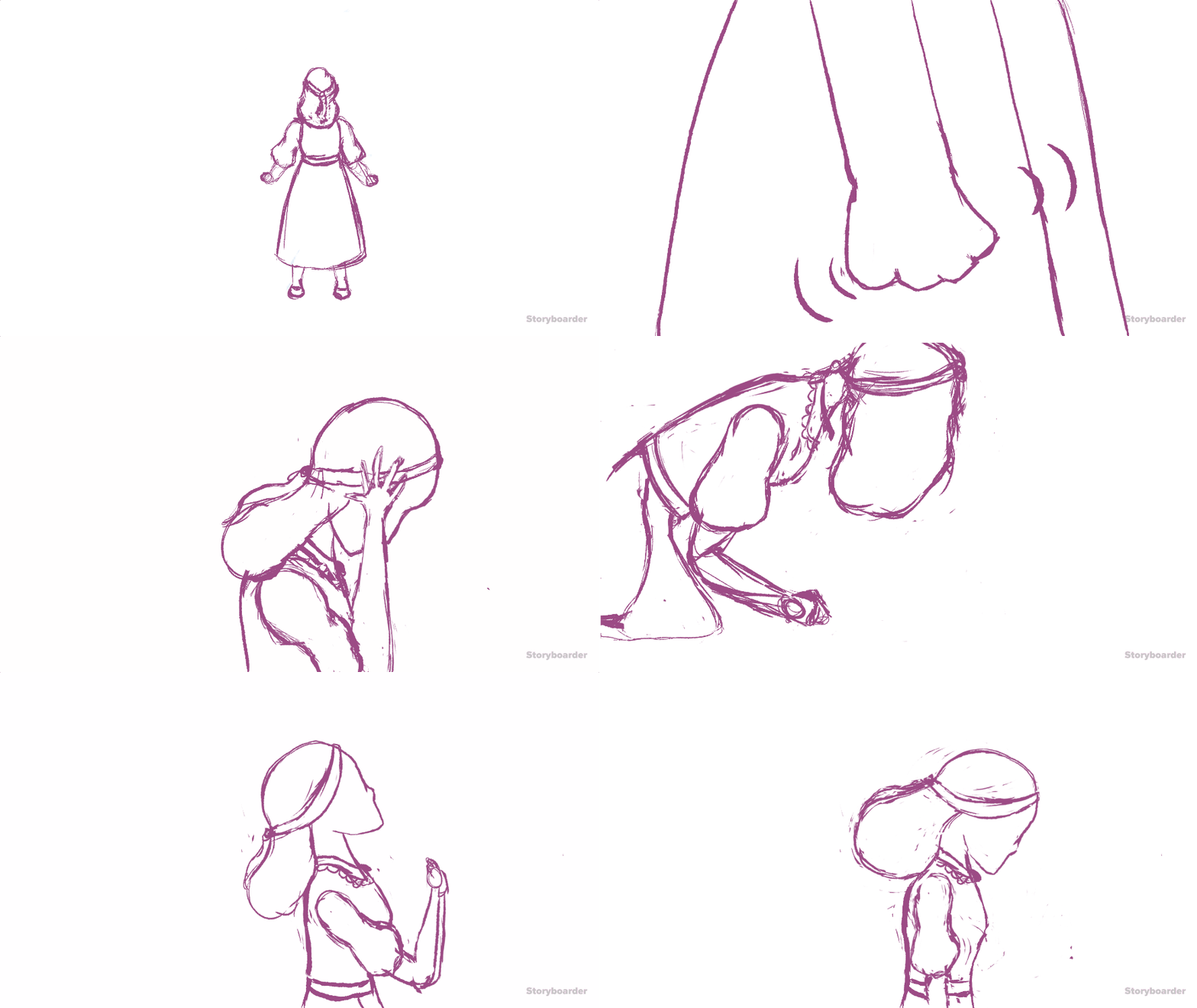
"She walks in to the second room as it clicks for her that she will have to spin another room’s straw of gold. And she still doesn’t have it."
The maiden knows she could be free, but she is thrown into a room with straw knowing that she can’t turn the straw to gold. This is what makes her fall into despair. Everyone wants to become something, and the fact of the ability to not become that something is what results in despair. The gap between where you are and where you could be is what creates despair.
“Kierkegaard, like Nietzsche a half-century later, sees the human self not simply as a finished product, a kind of entity, but as a developing process. A self is not simply something I am but something I must become…To be a self is to embark on a process in which one becomes something…Essentially, a person is in despair if they fail to be fully a self. An awareness of the emptiness of self results in that feeling we normally call despair….” - Stephen Evans, Kierkegaard
Despair is a deep emotional response to perceived hopelessness or overwhelming loss, often accompanied by a sense of powerlessness. Unlike fear, which prepares the body for immediate action, despair tends to result in emotional withdrawal and physical collapse. It can manifest both mentally and physiologically, reducing motivation, lowering energy levels, and signaling emotional surrender. Reactions to despair differ by individual, but it is typically associated with resignation, lack of control, and emotional exhaustion.
Facial Expressions:
-
Downturned gaze or unfocused eyes (suggests withdrawal or disconnection).
-
Furrowed or creased brow (indicates distress and mental strain).
-
Frowning or trembling lips (showing sadness or emotional overwhelm).
-
Slack facial muscles (reduced expression, often linked with hopelessness).
Posture:
-
Slumped shoulders (physically "carrying" the weight of emotion).
-
Collapsed chest or inward-turned torso (self-protective or defeated stance).
-
Hanging head (lack of alertness or motivation).
-
Minimal or lethargic movements (slowed response and lack of energy).
These body language cues communicate emotional despair and a withdrawal from engagement with the external world. Rather than signaling readiness or resistance, the body reflects a psychological state of giving up or deep sorrow.

